
Under Layers of Paint
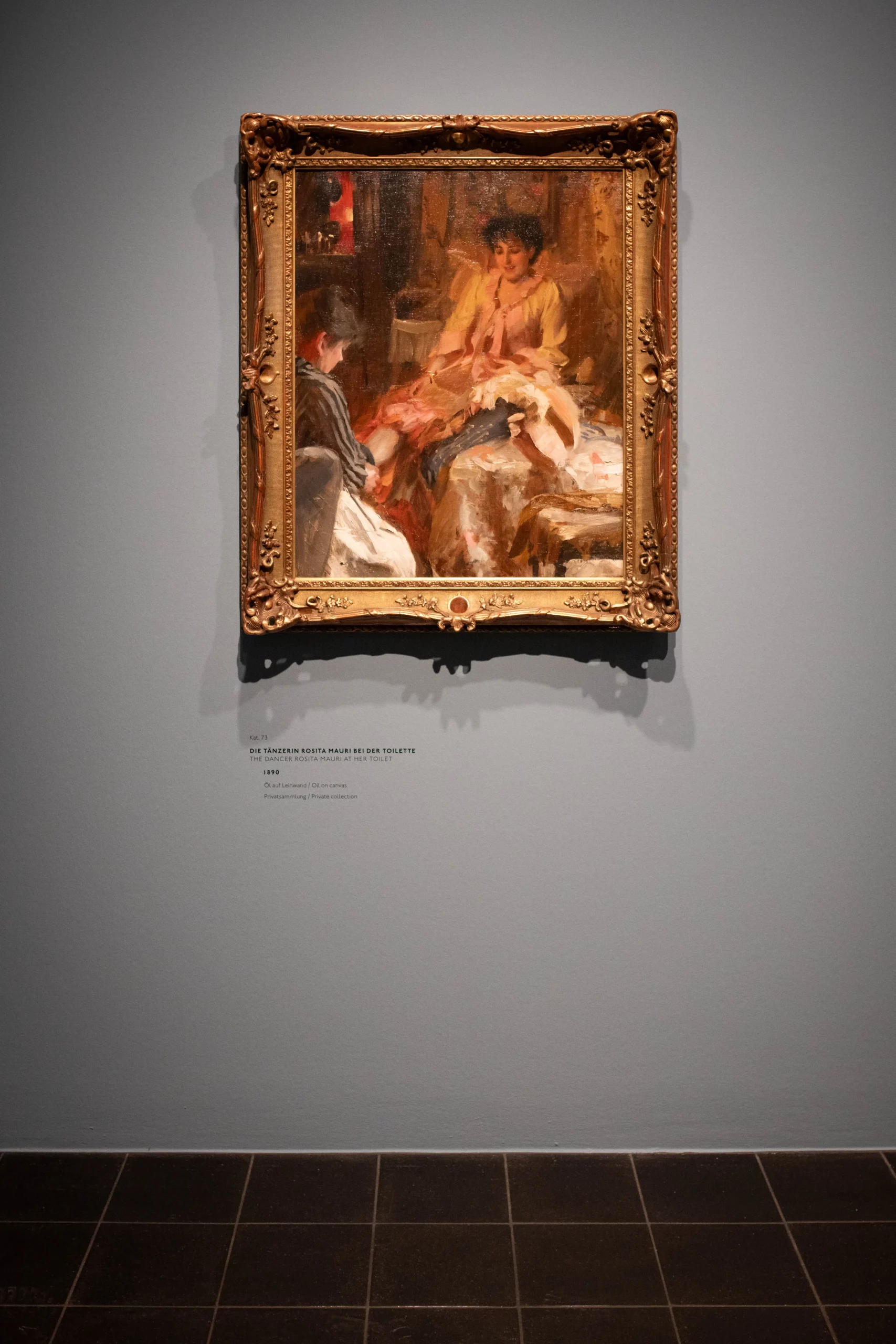
A few weeks ago, I visited the exhibition of Swedish “superstar” painter Anders Zorn (1860–1920) at the Hamburger Kunsthalle.
I did not enter with any expectations, and I did not go to the Kunsthalle because of Zorn. In fact, I knew very little about him. I entered the exhibition space slowly, reading the museum texts and looking at the paintings, maneuvering through the crowds.
The paintings were beautiful — alive with movement. Zorn is known for his travels: North Africa, Turkey, Spain, the United States. At the end of the 19th century, such journeys were not romantic weekend escapes. They were difficult, expensive, time-consuming. Travel meant distance, and distance meant rarity.
And yet what struck me most was not the geography — it was the framing.
I am a photographer. I recognize a photograph, even when it hides beneath layers of paint.
And yes — I saw photographs behind some of Zorn’s paintings.
I actually love these moments. When I see photos behind paintings and paintings behind photos. When the mediums intertwine. I have never seen that as a problem. On the contrary — I believe they can coexist, even strengthen one another.
I simply want to know about it. That’s all. If the wall text tells me the work is oil on canvas or watercolor on paper, why not also mention photography? Does the presence of photography simplify the artwork? Does it make it less true? Less sophisticated?
I turned to my husband and shared what I was seeing — the photographic framing, the sense that some of these paintings must have begun as images captured by a camera.
He looked at me and said, almost instinctively, “So he cheated.”
And for a brief second, I understood the reaction. The thought had crossed my own mind too. Not because I believed it. But because we are trained to think that way. The presence of a camera somehow feels like a shortcut. As if mediation weakens authenticity.
And yet, the more I thought about it, the more the opposite seemed true. Knowing that Zorn used photography did not diminish the paintings for me. It made them more understandable. More human. More relatable.
Photography is not a young medium. It has existed since 1839, when the daguerreotype was publicly announced in Paris. Almost immediately, the art debate began. Was this science or art? Was it mechanical reproduction or creative expression? Could something produced by a device ever carry the weight of authorship?
Nearly two hundred years later, the question has not disappeared. Sometimes the issue is whether photography can stand as an independent art medium. Sometimes it is whether it is “allowed” to assist painting. But the suspicion remains the same. Because of its mechanical nature, photography still feels too easy and too immediate. As if the camera does all the work.
And this is where I return to the exhibition.
It is possible, of course, that photography was mentioned somewhere in the wall texts and I simply overlooked it. Exhibitions are dense. Rooms are crowded. Attention moves. But what stayed with me was not whether the museum omitted something. It was my own reflex.
I am a contemporary photographer. I use the medium commercially and artistically. I speak about it publicly. I defend it. I argue for its depth and complexity. And yet, for a brief moment, when I realized that Zorn had relied on photographs, the word “shortcut” flickered through my mind, like a reflex deeply embedded in my way of thinking. Perhaps this reflex is part of something larger, a part of a persistent belief in what I have come to think of as the myth of the unassisted hand. The idea that great art must emerge untouched by assistance.
History suggests otherwise.
Continue reading:
→ The Myth of the Unassisted Hand
Post a comment